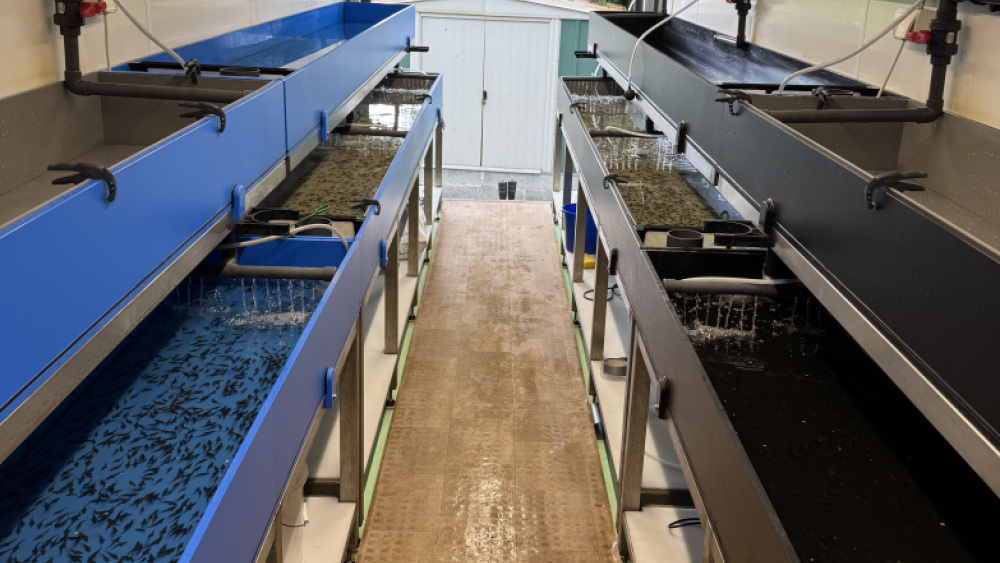
Rearing in multiple colored rearing tanks @Jessica Bathe-Peters
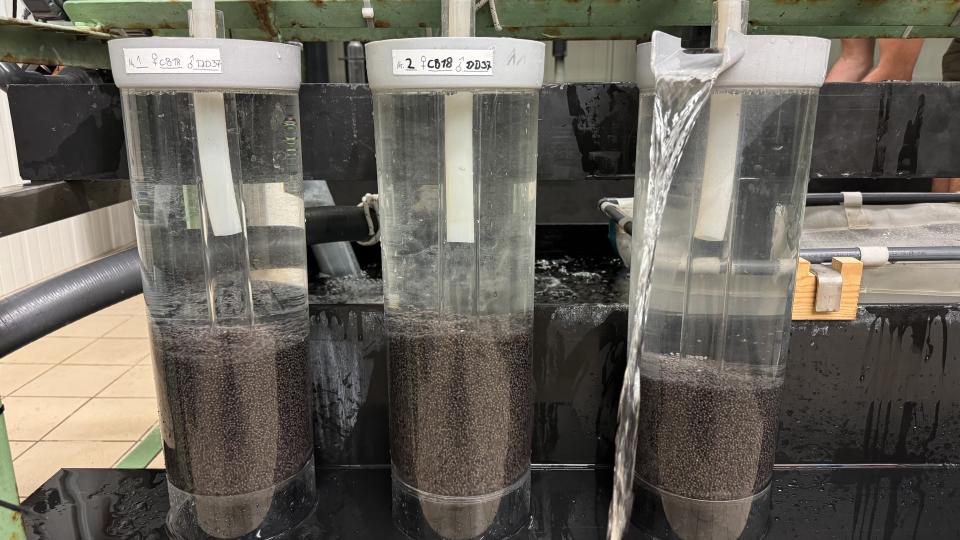
Within the project, established methods for rearing juvenile sturgeon are being further developed to ensure species-appropriate and practice-oriented husbandry. Determining color preferences and substrate selection helps to better understand species-specific needs and to tailor husbandry and management strategies accordingly. The aim is to minimize stress induced by rearing conditions and the associated selection pressure, thereby increasing post-release survival. This is achieved through sustainable improvements in growth, vitality, and context-appropriate behavior.
Color preference of juveniles (A. oxyrinchus)
It is well known that the coloration of the environment can influence fish behavior and potentially also growth, as demonstrated, for example, in studies on juvenile oscar cichlids (Astronotus ocellatus). In juvenile Chinese sturgeon (Acipenser sinensis), a clear preference for white over black substrate has been observed. Baltic sturgeon showed a clear preference for gray and red tank areas in tests, with longer residence times compared to black and blue areas. However, during a subsequent three-month rearing phase, no differences in growth were detected between fish kept in blue, black, or gray raceways.
Substrate preference of juveniles (A. oxyrinchus)
The response of sturgeon larvae to different substrate structures is also relevant for stress reduction. The aim is to identify substrates preferred by early life stages in order to assess available habitats in stocking waters and to adapt rearing conditions to the needs of the larvae. For example, one study showed that yolk-sac larvae of white sturgeon (Acipenser transmontanus) can achieve up to 20% higher survival rates under suitable temperature and substrate conditions. They also exhibit increased lipid reserves in the liver and benefit from improved fatty acid composition depending on substrate availability.
In husbandry experiments, yolk-sac larvae were exposed in an “endless raceway” with six equally sized sections containing sand, gravel, and stones. Three to five days after hatching, the larvae predominantly used gravel and stones, while open areas were utilized only to a very limited extent.
These findings suggest that suitable substrate reduces drift into unfavorable habitats. In contrast, sand promotes increased mobility and longer drift distances. Thus, substrate availability plays a central role in reproductive success and recruitment (see Crossman & Hildebrand, 2012).
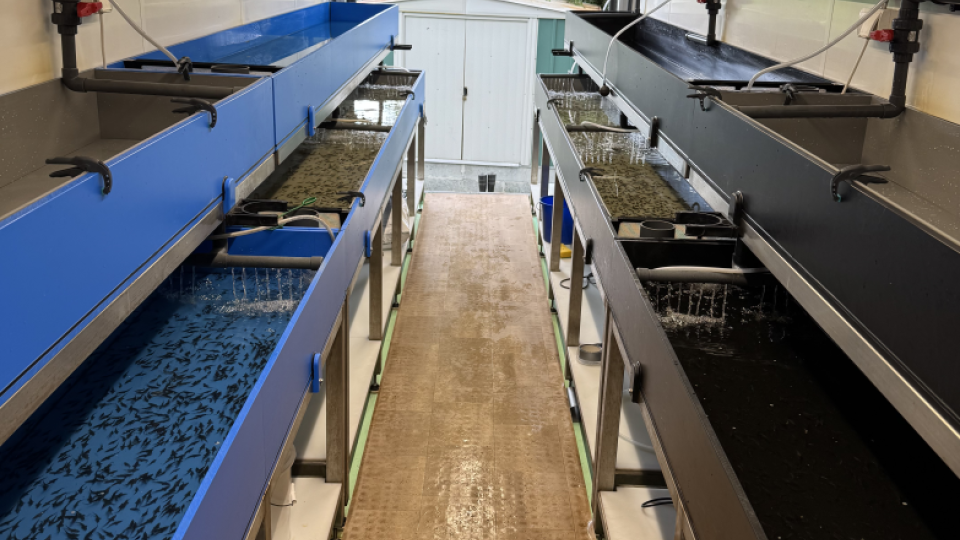
Aufzuchtsbecken